Social Media Marketing for Small Businesses in Bangladesh: A Practical Guide
Running a small business in Bangladesh is no longer limited to having a physical shop, office, or local customer base. Today, a Facebook page, Instagram profile, TikTok account, or YouTube channel can become one of the most valuable marketing assets for a growing business.
People use social media to discover products, compare businesses, read reviews, ask questions, and decide where they want to spend their money.
That creates a huge opportunity for small businesses.
The challenge is knowing where to begin.
You don't need a massive marketing team or an unlimited advertising budget to build a presence online. A clear strategy, consistent content, and regular interaction with your audience can take you surprisingly far.
This guide explains social media marketing for small businesses in Bangladesh and covers the practical steps you can start using today.
Why Social Media Is Important for Bangladeshi Businesses
Social media has changed the way customers and businesses communicate.
A customer may discover a clothing store through Facebook, see a product demonstration on TikTok, check an Instagram profile before ordering, and then contact the business through Messenger or WhatsApp.
In other words, social media can become your digital storefront.
For a small business, this has several advantages.
You can introduce your products to new people, communicate directly with potential customers, show previous work, collect feedback, and build trust without spending heavily on traditional advertising.
You can even start with a smartphone and a basic internet connection.
The key isn't simply being present on social media. The real objective is to create a useful and trustworthy online presence.
Start by Defining Your Business Goal
Before creating dozens of posts, decide what you actually want social media to accomplish.
Different businesses can have completely different objectives.
For example, you might want to:
-
Generate more product orders
-
Increase awareness of your brand
-
Reach customers in a specific city
-
Build a community around your business
-
Receive more messages and inquiries
-
Bring visitors to your website
-
Encourage existing customers to buy again
Choose one primary objective first.
When your goal is clear, it becomes much easier to decide what type of content to publish and which platforms deserve your attention.
Pick Platforms Based on Your Customers
You don't have to maintain five or six social accounts just because they exist.
Managing too many platforms often leads to inconsistent posting and low-quality content.
Start with the platforms where your target customers are most active.
For many small businesses in Bangladesh, Facebook can be a strong starting point.
It works well for:
-
Local businesses
-
Online stores
-
Service providers
-
Restaurants
-
F-commerce businesses
-
Community-based brands
Facebook also gives businesses several ways to communicate with customers through posts, Messenger, groups, reels, and advertising.
Instagram can work particularly well for visually attractive products.
It is useful for businesses selling:
-
Clothing
-
Food
-
Beauty products
-
Accessories
-
Handmade products
-
Lifestyle products
High-quality photographs, short videos, reels, and stories can help products stand out.
TikTok
TikTok is particularly useful for businesses that can demonstrate their products through short-form video.
Behind-the-scenes clips, demonstrations, tutorials, customer reactions, and entertaining videos can all become content ideas.
YouTube
YouTube is useful when your business can benefit from longer educational or informative content.
Tutorials, product explanations, reviews, guides, and demonstrations can help build credibility over time.
Build a Professional Business Profile
Your social media account is often the first thing a potential customer sees.
A profile that looks incomplete can make people hesitate.
Before focusing heavily on content, make sure the basic information is properly organized.
Your business profile should ideally include:
-
A recognizable logo or profile image.
-
A clear cover or header image where available.
-
A simple explanation of what your business offers.
-
Contact information.
-
Location information when relevant.
-
An easy way for customers to place an order or contact you.
-
Links to your website or other important platforms.
Keep your branding consistent.
Using similar colors, logos, fonts, and visual styles across platforms can make your business easier to recognize.
Create Content That Gives People a Reason to Follow You
One of the biggest mistakes small businesses make is turning every post into an advertisement.
Imagine following a page that says:
“Buy now!”
“Order today!”
“Limited offer!”
every single day.
Most people will eventually stop paying attention.
Instead, create a mixture of promotional and useful content.
Product Content
Show the product clearly.
Use good lighting, readable pricing, useful descriptions, and attractive visuals.
Educational Content
Teach customers something connected to your business.
For example:
A clothing store can share styling ideas.
A restaurant can share food-related tips.
A computer shop can explain how to choose the right laptop.
A digital service business can publish marketing tutorials.
Behind-the-Scenes Content
People like seeing how products are made, prepared, packed, or delivered.
This type of content can make your business feel more authentic.
Customer Stories
With appropriate permission, share genuine customer feedback, reviews, photos, or experiences.
Real customer experiences can help new visitors feel more confident.
Short Videos and Reels
Short-form video is an important content format across several major platforms.
You don't necessarily need expensive equipment.
A smartphone, decent lighting, and a clear idea can be enough to produce useful videos.
Use a Simple Content Schedule
Consistency matters more than posting a huge amount one day and disappearing the next.
You don't have to publish ten times every day.
A realistic starting point for a small business could be around 3–5 quality posts per week, depending on your available time and resources.
For example:
| Day | Content Idea |
|---|---|
| Monday | Product or service showcase |
| Tuesday | Short educational tip |
| Wednesday | Reel or short video |
| Thursday | Customer review |
| Friday | Promotional or offer-related post |
| Weekend | Behind-the-scenes or community content |
This isn't a strict formula.
The important thing is creating a schedule you can actually maintain.
Don't Ignore Comments and Messages
A social media page isn't a billboard.
It's a communication channel.
When someone asks:
“Price koto?”
“Delivery Dhaka-r moddhe ache?”
“Available ase?”
they may already be interested in purchasing.
A slow or missing response can mean losing that customer.
Try to respond clearly and politely.
Answer common questions consistently, provide accurate information, and avoid making customers repeatedly ask for basic details.
Good communication can turn social media attention into real business.
Build Trust Before Asking for the Sale
People generally don't want to buy from a business they don't trust.
This is especially important for online businesses where customers cannot physically inspect the product before paying.
You can strengthen trust by showing:
-
Real product images
-
Customer feedback
-
Product demonstrations
-
Packaging processes
-
Business information
-
Clear pricing
-
Delivery details
-
Return or refund policies where applicable
Your content should answer the customer's silent question:
“Why should I trust this business?”
Consider Paid Advertising When Your Page Is Ready
Organic content can help you build a foundation, but paid advertising can help you reach people outside your existing audience.
Platforms such as Meta provide advertising tools that allow businesses to promote their content to selected audiences.
You can experiment with a small budget rather than spending heavily from day one.
Start with one strong piece of content.
Measure the results.
See whether people are clicking, messaging, visiting your website, or purchasing.
Then use what you learn to improve future campaigns.
Don't assume that increasing your budget automatically increases your results.
The quality of the offer and content still matters.
Where an SMM Panel Can Fit Into Your Strategy
An SMM Panel can be used as a supporting tool within a broader social media marketing strategy.
For example, freelancers, agencies, creators, and businesses may use social media marketing services to support certain account or content objectives.
However, an SMM panel shouldn't replace the fundamentals.
A healthy social media strategy still needs:
-
Useful content
-
Consistent publishing
-
Real audience interaction
-
Strong branding
-
Customer support
-
Proper advertising when necessary
Think of an SMM panel as one tool inside your marketing toolkit, not the entire toolkit.
Common Social Media Marketing Mistakes
Many small businesses make the same avoidable mistakes.
Only Posting Advertisements
If every post asks people to buy something, your audience can quickly lose interest.
Inconsistent Activity
Posting ten times today and then disappearing for three weeks makes it difficult to maintain momentum.
Poor Visual Quality
Dark, blurry, or badly cropped photos can make even a good product look unprofessional.
Ignoring Customers
Leaving comments and messages unanswered can directly affect your sales.
Copying Competitors
Your competitors may inspire ideas, but copying their exact content won't build a unique brand.
Chasing Numbers Instead of Customers
Large follower counts don't automatically equal sales.
What matters is whether the right people discover your business, trust it, and eventually become customers.
A Beginner-Friendly Weekly Strategy
You can start much more simply than you think.
Try a weekly routine like this:
Monday: Showcase a product or service.
Tuesday: Publish a useful educational tip.
Wednesday: Upload a short video or reel.
Thursday: Share customer feedback or a business story.
Friday: Publish an offer or promotional post.
Weekend: Respond to messages, review analytics, and prepare next week's content.
You can also spend a few minutes every day replying to comments and checking customer questions.
As your business grows, you can make your strategy more sophisticated.
How to Measure Social Media Success
Follower count isn't the only metric that matters.
Depending on your goal, you may want to monitor:
-
Post reach
-
Engagement
-
Video views
-
Profile visits
-
Website clicks
-
Messages
-
Leads
-
Orders
-
Conversion rate
For example, imagine your page gains 500 new followers but receives zero additional customer inquiries.
Now compare that with a smaller campaign that brings 40 serious inquiries and 10 sales.
The second result could be much more valuable to your business.
Always measure social media performance against your actual business goal.
Frequently Asked Questions
How much does social media marketing cost in Bangladesh?
You can start with almost no budget by creating profiles and publishing organic content.
As your business grows, you can allocate money toward advertising, content production, influencers, or social media services depending on your strategy.
Which social media platform is best for Bangladeshi small businesses?
There isn't one universal answer.
For many businesses, Facebook is a practical starting point because of its broad local audience.
Instagram, TikTok, and YouTube can become valuable depending on your product, audience, and content style.
How many times should a small business post?
There is no perfect number for everyone.
Around three to five quality posts per week can be a practical starting point.
Consistency and quality are generally more useful than posting purely for the sake of frequency.
Do I need professional equipment?
Not necessarily.
A smartphone, reasonable lighting, clear audio, and good content ideas can be enough to start.
You can upgrade your equipment as your business grows.
Can an SMM panel grow my business automatically?
No.
An SMM panel is not an automatic business-growth system.
You still need good products or services, useful content, customer communication, branding, and an effective marketing strategy.
Should I use paid ads?
Paid advertising can be useful when you have a clear objective and a strong offer.
Start with a manageable budget, test your campaigns, and measure the results before scaling.
Is social media useful for local businesses?
Absolutely.
A local business can use social media to showcase products, share offers, communicate with nearby customers, collect reviews, and build a recognizable local brand.
Final Takeaway
Successful social media marketing for small businesses in Bangladesh doesn't have to be complicated.
Start with one clear objective.
Choose the platforms where your customers actually spend time.
Create a professional profile.
Publish content that is useful, entertaining, or informative instead of constantly selling.
Reply to customers.
Measure what works.
Then gradually invest more in advertising, content creation, and other marketing tools.
Consistency is often more valuable than trying to do everything at once.
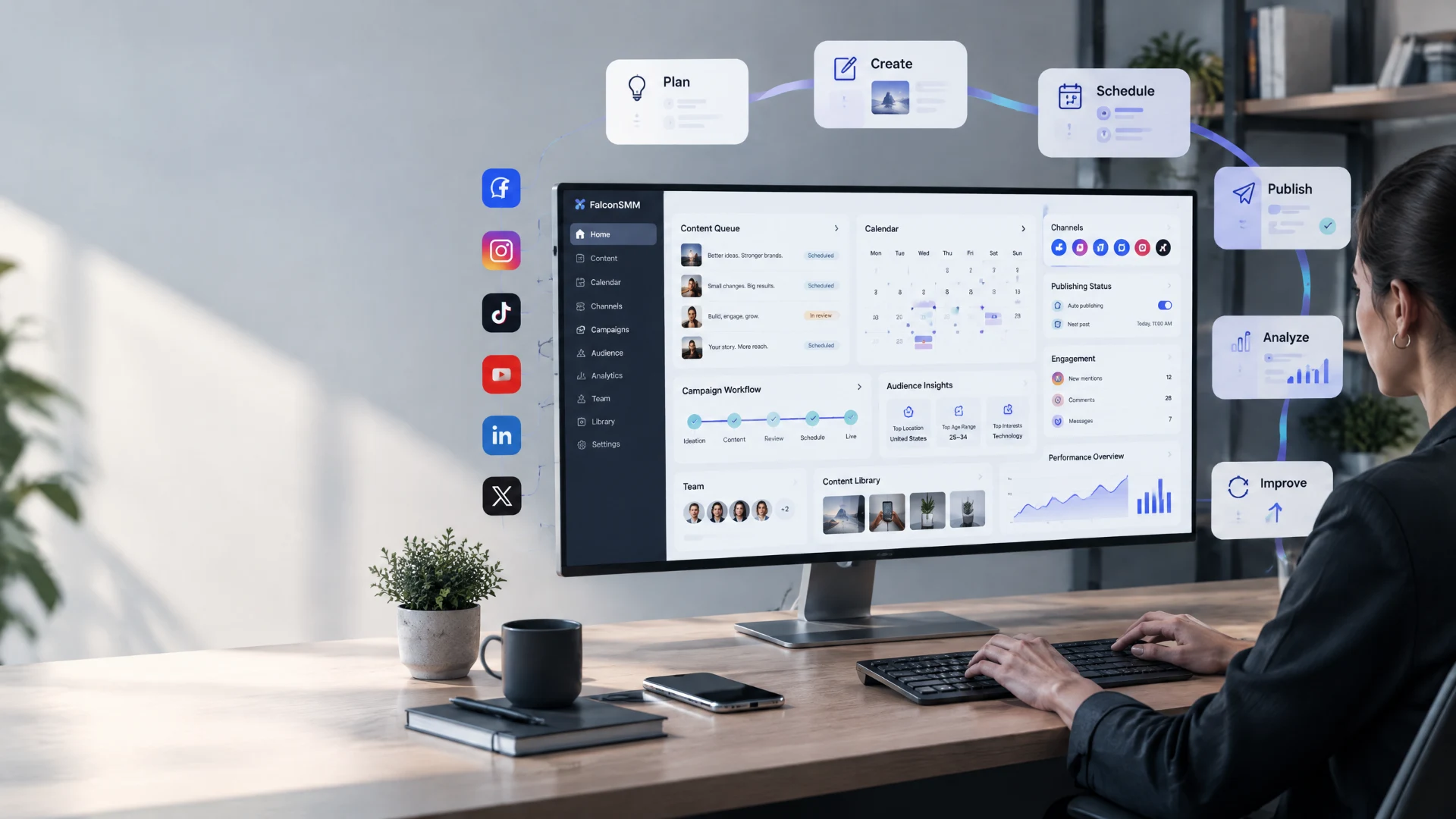
For businesses, freelancers, creators, and agencies that also need social media marketing services, Falcon SMM provides a centralized platform where you can explore and manage services for popular social platforms.
Build the foundation first, use marketing tools intelligently, and focus on creating a social media presence that generates genuine attention and long-term customer trust.
Ready to improve your social media strategy? Explore Falcon SMM and discover social media marketing services designed to make your workflow easier.